Where people moving out of Sacramento County actually go
Most people who leave Sacramento County don't go far. In the latest IRS migration file, the top destination is Placer County, and close to two out of three households that left stayed in California. The out-of-state moves are real, but they're spread thin across Nevada, Arizona, Texas, Washington and a long tail of everywhere else.
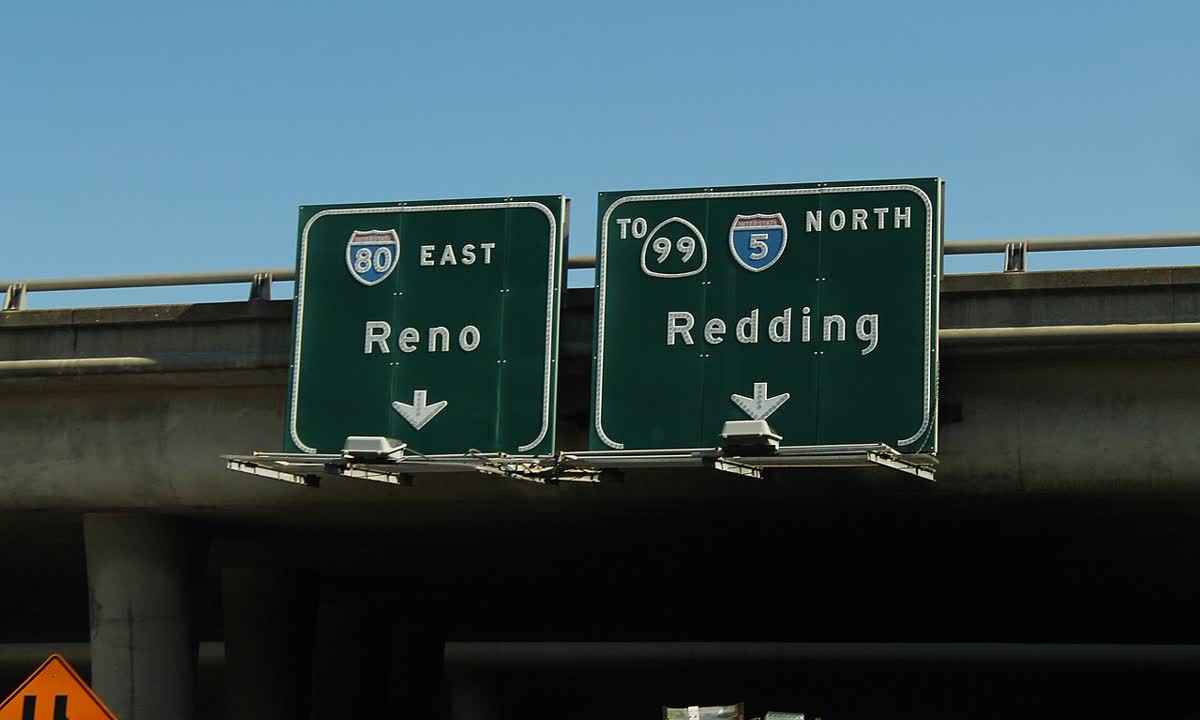
I spent fourteen years driving those moves, so none of this shocked me. Most of our jobs that left the county were short hops to Roseville, Lincoln or Rocklin. The trips over the Sierra were rarer, and they're the ones everybody remembers. Below is what the tax data says, and what it means for whoever is stuck deciding what to do with a house.
How the IRS counts a move
The IRS Statistics of Income office matches tax returns from one year to the next and looks at whether the address changed. The latest county files are labeled 2022-2023. Per the migration data users guide, that means returns filed in calendar 2022 (income earned in 2021) compared with returns filed in 2023 (income earned in 2022). Newer years aren't posted yet.
A few things to know before you lean on these numbers:
- A return is roughly a household. A married couple filing jointly with two kids is one return. The files also count individuals, which is closer to a head count.
- People who don't file a tax return aren't in the data at all.
- The address is a mailing address, so a PO box or a forwarding address can put someone in the wrong county.
- A county-to-county flow only gets its own line if at least 20 returns made that move. Smaller flows get lumped into "other flows" buckets.
- For 2022-2023 the IRS changed how it matches returns across years, and says the change adds about 5% more returns than the old method would have.
I pulled the county files from the IRS 2022-2023 migration page and ran them through a short script instead of copying numbers by hand. Every figure below comes straight from those files.
The top destinations
In 2022-2023, 33,869 returns (57,099 people) moved out of Sacramento County. Here are the twelve counties that took the most.
Top 12 destinations by number of returns. A return is roughly one household. Moves within Sacramento County are not counted.
| Destination county | Tax returns |
|---|---|
| Placer County, CA | 4,846 |
| Yolo County, CA | 1,751 |
| El Dorado County, CA | 1,465 |
| San Joaquin County, CA | 1,268 |
| Los Angeles County, CA | 1,153 |
| Alameda County, CA | 1,027 |
| Santa Clara County, CA | 860 |
| San Diego County, CA | 820 |
| Yuba County, CA | 802 |
| Solano County, CA | 739 |
| Contra Costa County, CA | 684 |
| San Francisco County, CA | 561 |
Source: IRS Statistics of Income, county-to-county outflow file 2022-2023.
Placer alone took 14.3% of everyone who left. Add Yolo, El Dorado and San Joaquin and the four neighbors account for 9,330 returns, or 27.5%. A lot of people "leaving Sacramento" are moving one county over. My guess is plenty of them kept the same job.
Overall, 21,637 returns (63.9%) stayed in California, 11,885 (35.1%) went to another state, and 347 moved abroad.
The files also count people, and dividing people by returns gives a rough sense of who's moving. Returns headed to Yuba County averaged 2.08 people each, and Placer and El Dorado 1.84. Returns headed to San Francisco averaged 1.30 and Los Angeles 1.36. That matches what I saw on the truck: the moves north and east were usually families with a garage full of bikes, and the moves to the big cities were more often one person and a futon.
The out-of-state list starts with Clark County, Nevada (Las Vegas) at 494 returns, then Maricopa County, Arizona (Phoenix) at 447 and Washoe County, Nevada (Reno) at 415. King County, Washington (Seattle) had 315 and Harris County, Texas (Houston) had 210. Texas is the sneaky one. No single Texas county is near the top, but 13 Texas counties cleared the 20-return bar, and together they took 1,079 returns. Nevada's five listed counties took 1,015. Those totals are floors, because another 4,567 out-of-state returns went to counties too small to get their own line.
Who moves in to replace them
This is the part that matters for sellers. People don't just leave. In the same year, 31,384 returns moved into Sacramento County from somewhere else.
| County | Moved there from Sacramento County | Moved to Sacramento County from there | Net for Sacramento |
|---|---|---|---|
| Placer, CA | 4,846 | 3,270 | -1,576 |
| Yolo, CA | 1,751 | 2,136 | +385 |
| El Dorado, CA | 1,465 | 1,314 | -151 |
| San Joaquin, CA | 1,268 | 1,637 | +369 |
| Los Angeles, CA | 1,153 | 1,217 | +64 |
| Alameda, CA | 1,027 | 1,592 | +565 |
| Santa Clara, CA | 860 | 1,515 | +655 |
| San Diego, CA | 820 | 619 | -201 |
| Yuba, CA | 802 | 362 | -440 |
| Contra Costa, CA | 684 | 1,170 | +486 |
| Clark, NV | 494 | 321 | -173 |
| Maricopa, AZ | 447 | 320 | -127 |
| All moves | 33,869 | 31,384 | -2,485 |
Two patterns jump out. Sacramento loses households to its neighbors to the north and east (Placer, Yuba, El Dorado) and to other states. It gains them from the Bay Area: Santa Clara, Alameda, Contra Costa, San Mateo and San Francisco all sent more households here than they took.
Add up the whole year and the county gained 1,429 returns from the rest of California and lost 3,757 to other states. The out-of-state loss more than covers the whole net decline.
The Bay Area arrivals also tend to report bigger incomes. Average adjusted gross income per return was $110,448 for households arriving from Santa Clara County, $105,860 from San Francisco, $103,721 from San Mateo and $95,181 from Alameda, against $71,674 for all arrivals. That's an average, so a few high earners pull it up, and income isn't the same as savings. Still, if you're selling a house in a part of the county with an easy drive to Interstate 80 or Highway 50, some of your buyers are probably coming from the west.
The trend since 2017
Tax returns. IRS says its new matching method adds about 5% more returns in 2022-23, so the drop from 2021-22 would look even bigger under the old method.
Show the numbers
| Filing years | Moved out | Moved in |
|---|---|---|
| 2017-18 | 31,738 | 33,378 |
| 2018-19 | 31,137 | 32,706 |
| 2019-20 | 34,374 | 35,022 |
| 2020-21 | 37,981 | 35,210 |
| 2021-22 | 37,981 | 32,870 |
| 2022-23 | 33,869 | 31,384 |
Source: IRS SOI county-to-county inflow and outflow files, 2017-2018 through 2022-2023.
Through the 2019-20 file, more households moved in than out. The lines crossed in 2020-21, and the gap was widest in 2021-22, when 37,981 returns left and 32,870 arrived, a net loss of 5,111. By 2022-23 the gap had shrunk to 2,485, mostly because fewer people left.
Even with net moves running negative, the county kept growing. The Department of Finance's May 2026 estimates put Sacramento County at 1,628,349 people on January 1, 2026, up 0.6%, the biggest numeric gain of any of California's million-plus counties. Elk Grove and Folsom each grew 2.1%. Placer was the fastest-growing county in the state at 1.4%, which lines up with it being the top landing spot for people leaving here.
Short moves and the 50-mile rule
If you're moving one county over for a job, there's a tax detail worth checking before you assume anything. When you sell a home you've lived in for less than two years, IRS Publication 523 allows a partial exclusion for a work-related move, but only if the new job is at least 50 miles farther from the house than the old one. California's own moving expense deduction uses the same 50-mile distance test.
Say your old job was downtown, 10 miles from your house in the Pocket, and the new one is 30 miles away in Roseville. That's 20 miles farther, not 50, so the job-move break doesn't apply on that basis. If you've been in the house more than two years, none of this matters, because the regular exclusion covers you. If you haven't, measure the distances before you list. The selling-before-a-job-move guide on this site walks through the math.
What this means for your house
Short movers have more options than the people heading to Texas. From Roseville or Davis you can still meet a plumber at the old house on a Saturday, so renting it out or selling after you move is realistic. From Phoenix it's a plane ticket every time something breaks, and I've seen that wear people down fast.
For sellers, the data says a real share of newcomers come from the Bay Area, and the county is still adding people. That doesn't set your price or your timeline. Condition and asking price still do most of that work.
If the clock is short, some owners skip the listing and sell for cash. In the south county, 916 Home Offer runs a page for people searching we buy houses in Elk Grove, and on the east side it has one for Folsom cash home buyers. Get that number and a listing estimate, then compare what each puts in your pocket after costs and carrying time.
And if you leave California before the house sells, read up on California real estate withholding. Escrow may hold back part of the sale price as prepaid state income tax unless you qualify for an exemption on Form 593. A house that was your main home usually can, but have your escrow officer walk you through the form before closing day, not on it.
What the IRS file can't tell you is why anybody moved. Job, rent, a new grandkid in Reno. On moving day, I'd usually get the reason somewhere between the second and third load. The numbers only tell you where the truck ended up.